
Interview · Endometriosis
20 Years on the Front Line of Endometriosis Care: Liz Bruen's Story
If you've been told you might have endometriosis — or you're the one who's had to fight for years just to get a diagnosis — chances are you don't have many straight answers.
Why an MRI can come back clear when the endometriosis is still there? How do I manage the flare ups and pain?
My symptoms shows endo but my doctors dont listen to me, where do I go from here?
Liz Bruen is someone who’s been answering those questions for years.
She's spent almost twenty years as an endometriosis Clinical Nurse Specialist — Wales's first, and for fifteen years, its only one.
We sat down with her for an in-depth conversation: what an endo nurse actually is and how to find one, how endometriosis care has changed over the last two decades (and where it's still stuck), and a practical walk-through of diagnosis, symptoms and support that most people never get.
What is an Endometriosis nurse?
Most people have never heard the term "endometriosis nurse," and even fewer know its official name: Clinical Nurse Specialist, or CNS. It's a role built specifically to fill a gap — someone who takes a full history, examines and scans where needed, and, crucially, has the time that a routine GP or gynaecology appointment usually doesn't, to actually sit and listen.
Liz describes it simply: someone who's prepared to analyse your symptoms, give you honest information, and lay out your options — because, as she puts it, an endo nurse "can't be there at four o'clock in the morning" when a flare-up hits.
"The job isn't to fix everything in the room. It's to make sure you leave with a clearer picture and a plan, so you can make informed choices about your own care."
Where it gets frustrating is access
It depends heavily on where you live.
In Wales, you can self-refer in Cardiff, or get a GP referral to an endo nurse in Newport, with other health boards gradually developing similar routes.
In England and Scotland, hospitals accredited as endometriosis centres by the British Society of Gynaecology and Endoscopy (BSGE) will typically have a CNS attached — you can find your nearest one by searching the BSGE's list of accredited centres.
In Northern Ireland, there is currently only one endometriosis centre, and as far as Liz is aware, only one endo nurse for the whole country.
The History of Endometriosis Care: What's Changed, What Hasn't
Endometriosis nursing is barely a generation old. The first endo nurses appeared around 24 years ago; Liz came into post in 2006 and, for fifteen years, was the only one in Wales.
England and Scotland moved faster — a 2012 BSGE accreditation rule requiring endometriosis centres to have a dedicated nurse triggered a wave of new posts. Wales didn't catch up until 2018, via a government task force Liz co-led, and even that recommendation still isn't fully delivered: several nurses have since left the role, most due to stress rather than promotion.
What's changed for the better:
Awareness has grown, particularly since the 2020 All-Party Parliamentary Group inquiry into endometriosis put the condition firmly on the political agenda in a way it hadn't been before.
The Royal College of Obstetricians and Gynaecologists has since published papers — in 2025 and again in 2026 — explicitly calling for greater investment in women's healthcare.
Research has accelerated too, with notable work coming out of Scotland, Cambridge and Oxford, and newer treatment options — like the drug Dienogest, shown to shrink endometriomas by two to three centimetres in some patients — reaching more women than they used to.
Interest in pelvic physiotherapy as part of standard care is also growing, even though NICE has recommended it for years without the resources to back it up.
What hasn't changed enough
is the diagnostic pathway itself. One recent study found that 70% of GPs correctly suspect endometriosis at the very first appointment — and patients still go through, on average, another 10 to 20 appointments before anything is actually done about it. Liz sums up the bottleneck in four words: "it's education, it's time, it's resources, it's finance."
Part of that bottleneck, she says, is expertise rather than access alone — having the technology isn't the same as having someone trained to read it properly. Even something as widely used as an MRI depends entirely on who's interpreting it:
"The benefits of MRI depend on who's reading it. If you're having an MRI, it must be with a radiologist who has an understanding of endometriosis and knows what they're looking for. Otherwise, they'll miss it."
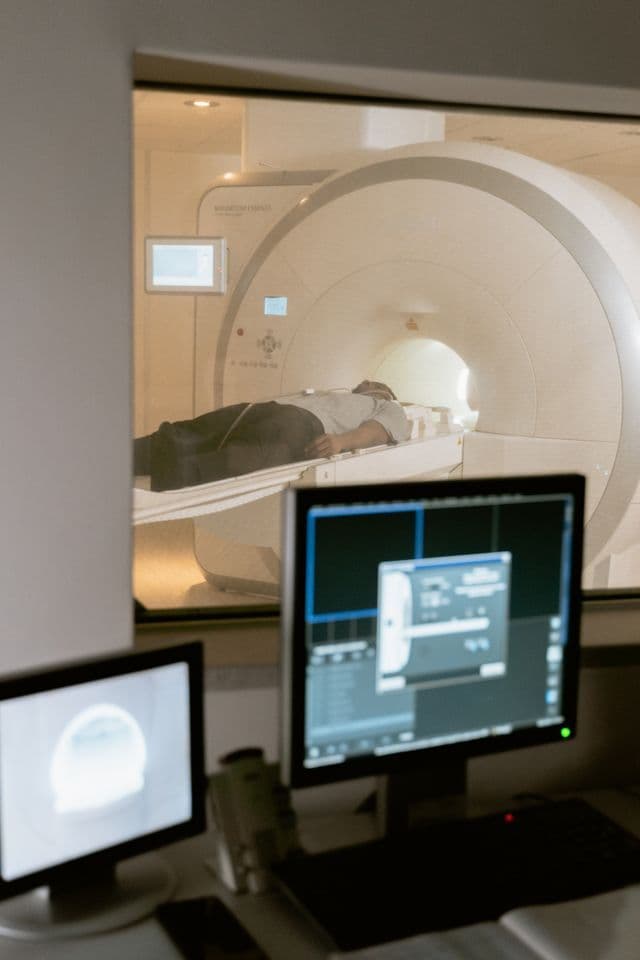
She draws the same line under surgery: a laparoscopy carried out by someone who doesn't know what they're looking for will miss the same disease a specialist would catch. It's why she recommends every patient explicitly ask their surgeon for a full 360-degree assessment — diaphragm, bowel, appendix, ovaries, bladder — rather than assuming a "normal" laparoscopy has ruled anything out.
Her long-term goal, and the reason she still presents at primary care nursing conferences twice a year, is a primary-care-based gynaecology nurse — someone as accessible, locally, as a diabetic nurse — rather than a system that only responds once you've already been referred to a hospital specialist.
The Transvaginal Scan, Properly Explained
You've probably heard laparoscopy is "the" way to diagnose endometriosis — so why does your nurse want a transvaginal scan first? It's now the internationally recommended first-line test, and done properly, it can tell a specialist most of what surgery would.
Endometriosis in Teenagers
How do you tell the difference between "a bad period" and something that needs looking into? Liz points to the specific red flags — pain severe enough to stop a teenager standing up or going to school, or a strong family history — that separate normal period pain from something worth investigating further.
She's also blunt about a lesser-known reason diagnosis gets missed even in surgery:
“In teenagers, endometriosis often hasn't yet developed the dark, pigmented appearance most surgeons are trained to look for — it can still be clear, almost invisible, which is exactly why an inexperienced surgeon can operate and find "nothing there."
Meet Liz: Wales's First Endometriosis Nurse
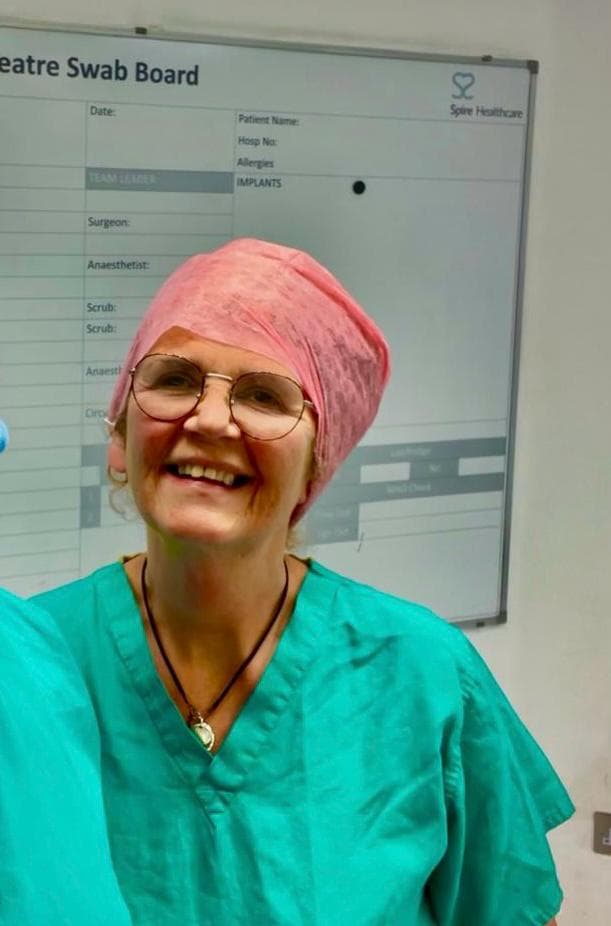
Liz didn't start out in gynaecology. She spent years as a theatre clinical lead, running two operating theatres and a team of ten, before a chance mentorship changed the direction of her career. Working alongside consultant gynaecologist Richard Penkett — who she describes as "the god of endo in Wales" — she began noticing a pattern: young women, often under 25, coming back again and again for pain management, sometimes labelled as drug-seeking, when what they actually had was undiagnosed endometriosis.
In 2004, Penkett sponsored Liz to attend a gynaecological laparoscopy conference in San Francisco. Watching her on the surgical simulators, he told her she had "an eye for this." That conversation set her on a new path: within two years, in 2006, she became Wales's first endometriosis clinical nurse specialist — and for the next fifteen years, its only one.
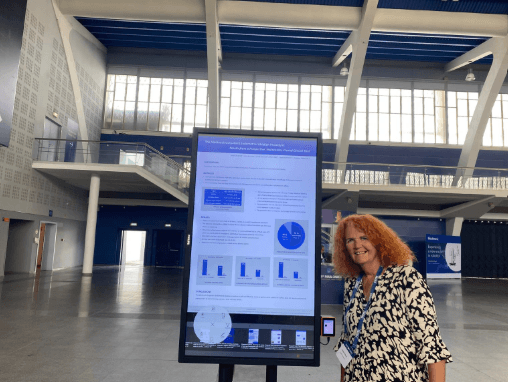
Since then, Liz has helped build the national case for endometriosis care in Wales, co-leading a 2018 government task-and-finish group that recommended every health board have access to an endometriosis nurse. She's trained colleagues across Wales, England and Scotland, presented nationally and internationally on primary care access to endometriosis services, and contributed to national clinical guidelines, including work that helped bring the drug Ryeqo into NICE protocols.
Today, Liz works across NHS and private care: assisting in advanced laparoscopic surgery in Cardiff, running her own virtual endometriosis clinic, and — through DocMap — making that same expertise accessible to anyone who needs somewhere to start.
What does the appointment look like?
Wondering whether a virtual appointment can actually get you anywhere with something as complex as endometriosis? Liz walks through exactly what happens in a consultation — from the questions she asks first, to how a plan actually gets built around you.
Endometriosis at Work
Can you actually ask your employer for adjustments because of endometriosis — and does it count as a disability? Liz breaks down what you can ask for.
Track Your Symptoms Before Your Appointment
Ever left an appointment feeling like you didn't get across how bad it actually is? Liz explains why a symptom tracker changes that conversation completely — and which free ones she actually recommends.
About the author
DocMap editorial team · Patient education
DocMap publishes practical guides to help UK patients navigate endometriosis care.
Not sure where to start?
Use Guided Care to map your symptoms and see sensible next steps — NHS and private routes included.
Check your pathway